


Innovative biostimulant products for a sustainable growth: Activeg and Dynamic improve yields, quality and resistance of crops
EU has classified as “biostimulants” all the products stimulating crops nutritional processes, regardless of their nutrients content, with the only purpose of improving one or more of the following characteristics of plants or rhizosphere:
- nutrients use efficiency (NUE);
- tolerance against abiotic stress;
- quality characteristics;
- availability of nutrients in soil or rhizosphere.
Biostimulants are divided into various categories, such as humic substances, brown seaweeds, protein hydrolyzates and silicon.
Specifically, protein hydrolysates contain:
- free amino acids and peptides;
- carbohydrates;
- minerals;
- other molecules (triacontanol, polyamines);
- phytohormones (plant origin).
Protein hydrolysates originate from the hydrolysis process (chemical or enzymatic), obtaining products with amino acids and peptides. The degree of hydrolysis varies depending on the method used.
Amino acids exist in two forms: left-handed and right-handed. We focus on left-handed amino acids, directly used by plants for protein synthesis, energy production and plant resistance against water and heat stress.
The quality of protein hydrolysates depends on the racemization degree: the higher the ratio of right-handed to total amino acids, the better the product’s quality. The most common form of amino acids varies depending on the type of hydrolysis used. In particular, high temperatures and high pH values lead to a more relevant presence of right-handed amino acids.
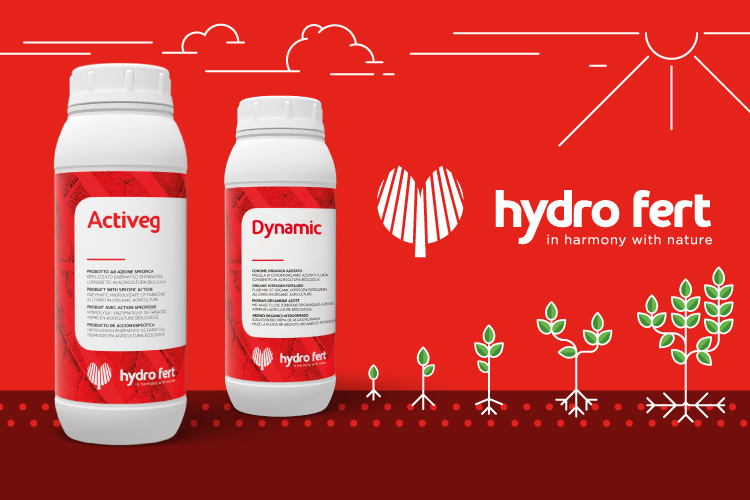
In this article, we show two protein hydrolysates in our catalog: Activeg and Dynamic.
Let’s see them in detail:
Activeg is an enzymatic hydrolyzate of Fabaceae. Enzymatic hydrolysis allows to obtain a high-quality fertilizer thanks to the production of signal peptides, which are low-molecular-weight molecules able to influence plants physiology and, therefore, growth and stress reaction. Among the active substances in such biostimulant we have triacotanol (a long-chain alcohol that stimulates plants metabolism even under stress conditions) and left-handed amino acids, which are directly assimilated by crops. Experimental trials have proven that Activeg stimulates root and vegetative development of young plants, promotes biomass production, improves the use of nitrogen and increases the Brix (°Bx) content.
Dynamic is a fluid mix of organic nitrogen fertilizers. It contains free amino acids that can be rapidly assimilated, such as alanine (useful to improve resistance against environmental stress), phenylalanine (essential for lignification of plants tissue) and leucine (a precursor of flavours and ripening). Experimental tests have shown that Dynamic increases:
- ascorbic acid production, which prevents the risk of fungal infections and neutralizes free radicals;
- weight and number of fruits per plant;
- dry matter;
- leaves color’s intensity;
- calcium, magnesium and potassium levels.
Such biostimulant has also shown a reduction in nitrate levels of leafy vegetables (experimental test on rocket).
Source: Hydro Fert.